
What Are Aerial Silks? A Beginner's Guide to Aerial Fabric
Aerial silks, also known as aerial fabric or aerial tissue, is a circus discipline in which a performer climbs, wraps, poses, and performs drops on two lengths of specialized fabric suspended from an overhead rigging point.
Aerial silk performances combine grace with incredible strength and are best known for their seemingly death-defying drops (spoiler: with instruction, technique, and safety protocols, these drops are achievable and can be done safely).
What are aerial silks made out of?
Aerial silks are made from an incredibly strong synthetic fabric. While specifics vary by manufacturer, most are made from a nylon or polyester weave. For example, Aerial Essentials, a popular reseller, uses a 40 denier 100% polyester tricot for their aerial fabrics. Fabric Depot, meanwhile, uses a nylon tricot.
How are aerial silks rigged?
Aerial silks are typically hung on a rescue 8, a tool typically used for rescue situations and fast rappelling in rock climbing. The fabric is folded in half and then woven around the rescue 8 to create a secure knot. From there, the rescue 8 is attached to a swivel, either directly using an open swivel or, more commonly, via a carabiner. While twist carabiners have been used for decades, modern rigging uses auto-locking carabiners for improved safety.
Once set, the aerial silk is hung from a secure point. Practicing aerial silks generates a literal ton of force, so proper rigging is critical. Most homes, trees, and beams are not safe for aerial silks, and you risk injuring yourself and damaging the structure. Always consult with an expert.
What is the history of aerial silks?
Well, that’s a challenging question to answer! According to Aerial Physique, the origins of aerial silks are unclear. One reference points to a circus student performing on a long strip of fabric in 1959. Some credit it to André Simard of Canada, who was an early acrobatic research and development specialist at Cirque du Soleil. Others point to Isabelle Vaudelle, who performed silks at the 1995 Festival Mondial du Cirque de Demain. Still others cite Vaudelle and Isabelle Chassé performing silks in Quidam, a Cirque du Soleil show that ran from 1996 to 2012. Yet, during their research, Aerial Physique found a photo of a vaudeville performer hanging from what looks like silks in the 1900s. The true origins will never really be known. But what is known is that aerial silks continue to capture the imagination, determination, and innovation of professional circus performers and recreational newcomers from across the world.
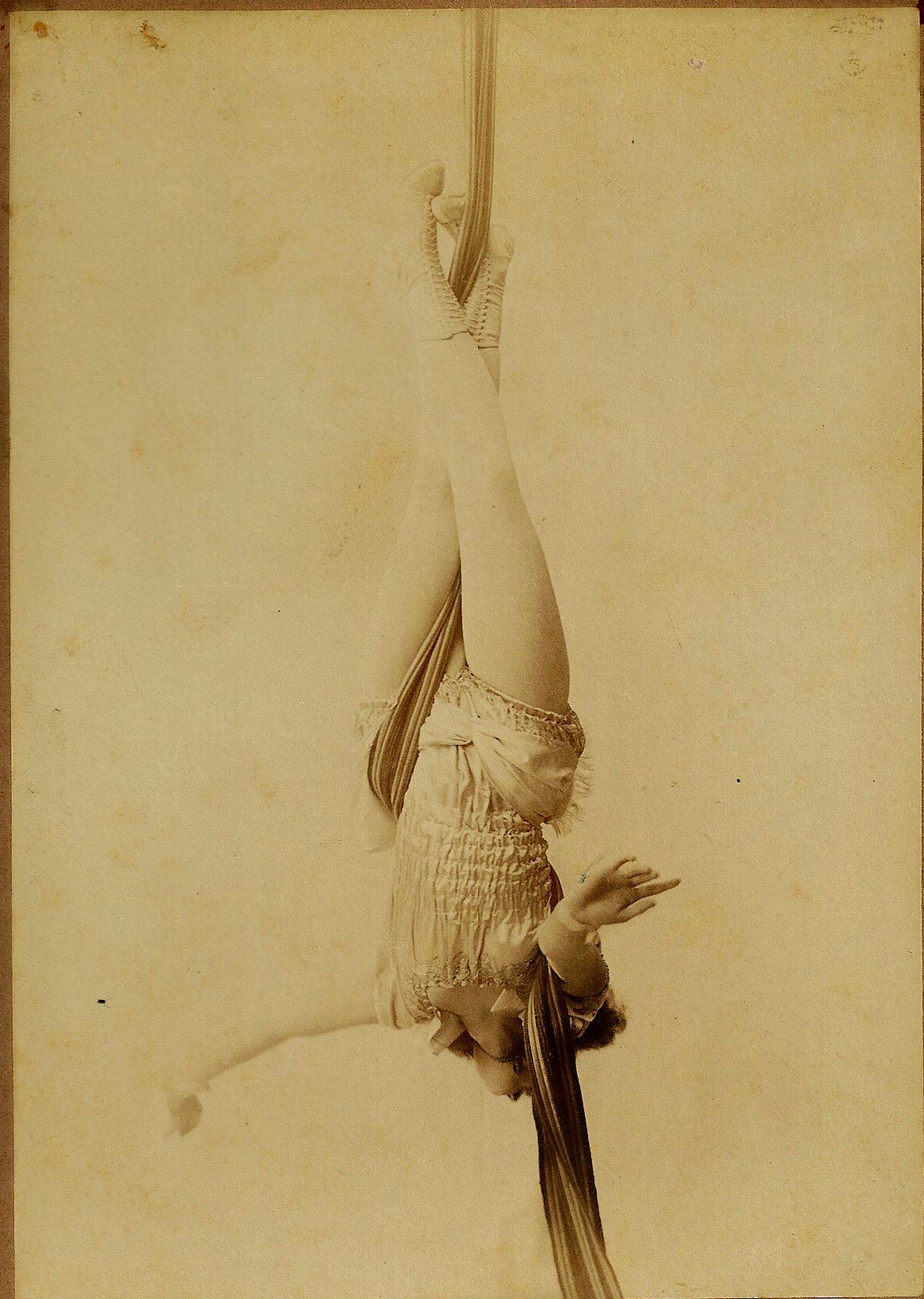
A circus performer from the 1900s. Image Credit: Amy LaVan, The Circus Blog
Can I learn aerial silks?
Yes! In the past decade, aerial silks has exploded onto the recreational fitness scene. At Roustabout School of Circus and Performing Arts, we have aerial silks classes for all levels, from true beginners to pre-professional.
View our adult aerial and circus class schedule.
Teens and pre-teens can find our schedule here.
